Navigating the world of autism therapy can feel like a rollercoaster ride for families, especially with all the new technologies popping up!
With advancements like AI-driven tools and telehealth services, there’s a real chance to create personalized treatment plans that can help improve communication skills among children.
But with all these new tools, it can be tough to keep up, and some challenges can feel overwhelming for parents.
So, how do we find that sweet spot between using tech to help our kids and keeping those important personal connections alive?
Let's explore this together!
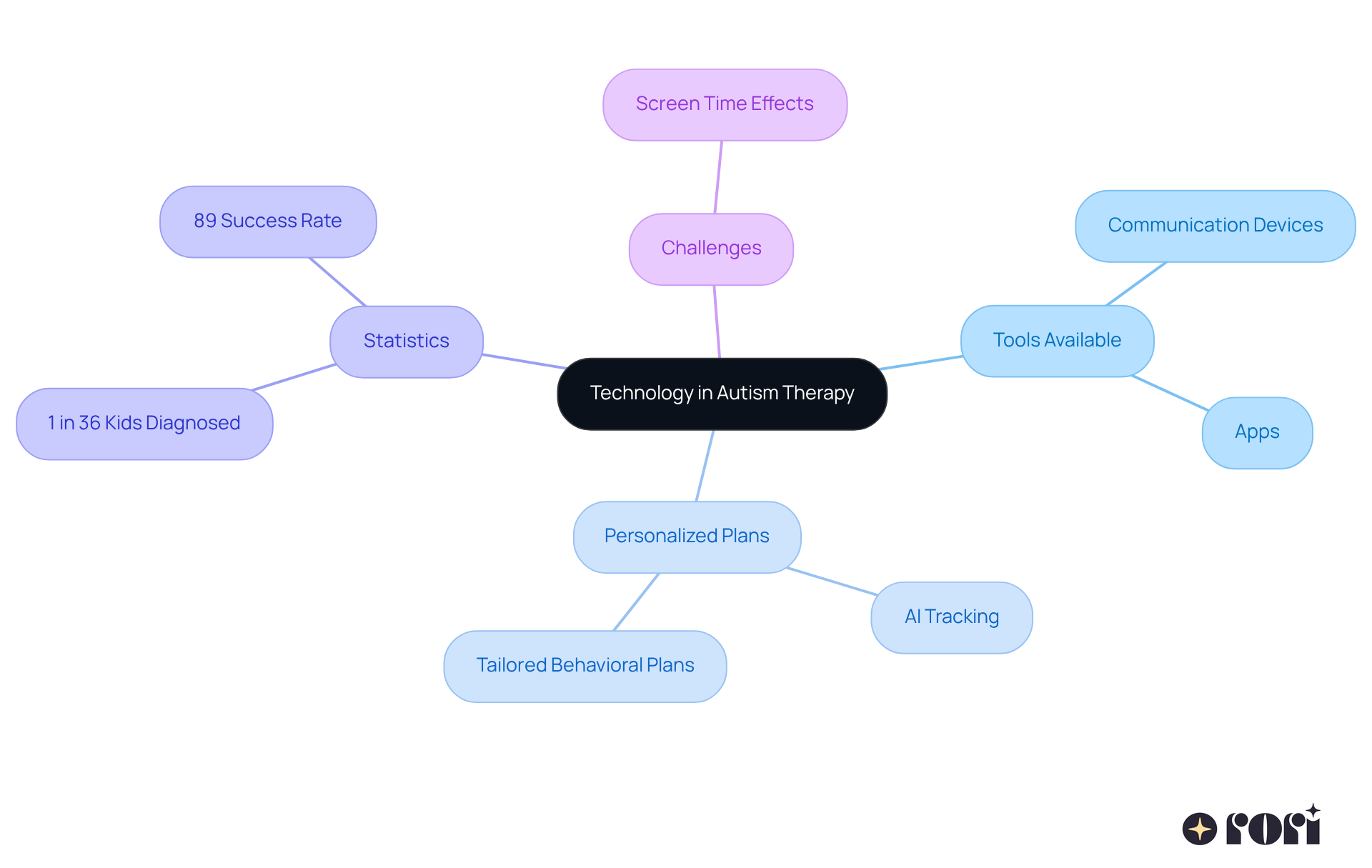
Navigating the world of autism therapy can feel overwhelming for parents, especially with so many tools available. When it comes to autism therapy, technology offers a whole toolbox of resources that can really help families navigate the challenges of autism spectrum disorder (ASD). From communication devices to fun apps, these supportive tools can make learning and socializing a lot easier for kids.
What’s great is that this approach lets therapists create personalized plans that really focus on what each child needs to thrive. For instance, Rori Care uses cutting-edge AI to track progress and create reports, freeing up 50% more time for child treatment. This means that each behavioral plan is tailor-made to fit the unique needs, strengths, challenges, and goals of the child.
Did you know that 1 in 36 kids are diagnosed with autism? That’s why these tech solutions are so important for families! Measurable goals are set for behavior change and skill development, providing a clear way to see progress. Evidence-based strategies ensure that the most effective methods are used for behavior change.
Research shows that the challenges and opportunities of technology in autism therapy can lead to significant improvements in social skills and overall development. In fact, ABA treatment has an impressive success rate of over 89% in enhancing various aspects of life for children with ASD. But let’s not forget about screen time! Too much can really affect how kids communicate and even lead to some emotional ups and downs.
In the end, these advancements are key to bridging the gap between therapy and the real-life challenges kids with autism face, helping them grow and thrive. Finding the right balance with technology can truly make a difference in your child's journey.
Navigating the world of developmental disorder treatment can feel overwhelming for parents, especially with so many changes happening in the field. Initially, autism therapy relied heavily on traditional methods, like direct behavioral interventions. But then came the late 20th century, when the challenges and opportunities of technology in autism therapy started to change the game. Can you imagine how exciting that must have been?
At first, these tools were simple communication aids, but as technology advanced, they became more complex and effective. Fast forward to 2025, and telehealth is making waves! With live virtual sessions and remote coaching, families - especially those in rural areas - can finally access the support they need. Isn’t that a relief?
Today, we’re seeing amazing innovations like artificial intelligence (AI) and virtual reality (VR) being woven into treatment, which illustrates the challenges and opportunities of technology in autism therapy. These technologies offer immersive experiences that can really boost learning and social skills. AI is particularly transformative, helping therapists track progress and create custom lesson plans. Plus, Rori Care is using AI to automate progress report generation, freeing up 50% more time for child treatment. This means therapists can focus more on personalized care!
As we embrace these advancements, it’s crucial to remember the challenges and opportunities of technology in autism therapy, as support is just a click away, making it easier for families to find the help they need.

While there’s been great progress in autism treatment tools, many families still encounter the challenges and opportunities of technology in autism therapy that can feel overwhelming. One significant issue is the digital divide, which illustrates the challenges and opportunities of technology in autism therapy, making it difficult for families in underserved communities to access the tech they need. This gap can really hold these families back from making the most of new therapies.
Additionally, the challenges and opportunities of technology in autism therapy can make it difficult for therapists and families to keep up with the rapid emergence of new tools, which might hinder the implementation of best practices in treatment. And let’s not forget, the challenges and opportunities of technology in autism therapy highlight that relying too much on devices can take away from the important human connection that’s so crucial in therapy.
We also need to consider the challenges and opportunities of technology in autism therapy, as keeping sensitive information about our kids safe is super important. By tackling these challenges together, we can ensure that every child gets the support they truly deserve.

Navigating autism treatment can feel overwhelming for many parents, especially with the rapid changes in available resources and support. The challenges and opportunities of technology in autism therapy are evident as using digital tools in autism treatment opens up exciting ways to improve care and make a real difference for families. One of the biggest perks is how these tools help tailor treatment plans based on data-driven insights, allowing therapists to customize their approach to fit each child's unique needs.
AI helps by looking at behavior patterns and suggesting quick changes to treatment when needed. This means that therapists, caregivers, and professionals can work together more effectively, ensuring that everyone is on the same page. For example, AI-driven progress monitoring fosters collaboration, making interventions more consistent and coordinated.
And let’s not forget about the fun stuff! New advancements like virtual reality and gamified learning experiences engage children in creative ways that traditional methods might miss. Plus, telehealth services make it easier for families to connect with specialists, no matter where they are.
As more families seek certified ABA therapists - up by a whopping 5,852% since 2010 - it's clear that personalized treatment is more important than ever! The challenges and opportunities of technology in autism therapy present vast possibilities, promising a future where interventions are more effective, accessible, and tailored to individual needs.
As we embrace these advancements, families can look forward to a brighter, more supportive future in autism care. Together, we can explore these exciting possibilities and make a positive impact on the lives of children and their families!

Imagine a world where technology opens doors for children with autism, making therapy more accessible and effective than ever before. By using innovative tools like AI, telehealth, and virtual reality, families can find personalized treatment plans that fit their child's unique needs. This change not only makes therapy easier but also brings families and therapists together, ensuring every child gets the support they need.
Throughout this journey, we’ve seen both the challenges and opportunities that technology brings to autism therapy. But let’s not forget, many families still face challenges accessing these tools, which can feel really frustrating. While tech can help kids learn and communicate better, we must remember that the human touch is what truly makes therapy work.
As families journey through autism therapy, embracing technology can open up a world of possibilities for their kids. By advocating for greater access to these innovative tools and staying aware of the challenges, we can work together as a community to ensure that all children with autism have the chance to thrive. Together, we can ensure that every child with autism has the chance to shine, with technology lighting the way.
What role does technology play in autism therapy?
Technology provides a variety of resources that help families navigate the challenges of autism spectrum disorder (ASD), including communication devices and apps that facilitate learning and socializing for children.
How does technology personalize autism therapy?
Therapists can create personalized plans using technology that focus on each child's unique needs, strengths, challenges, and goals, allowing for tailored behavioral plans.
What is Rori Care and how does it utilize technology?
Rori Care is a platform that uses cutting-edge AI to track progress and create reports, which increases the time available for child treatment by 50%. This allows for more individualized care.
What is the prevalence of autism in children?
Approximately 1 in 36 kids are diagnosed with autism, highlighting the importance of tech solutions for affected families.
How are measurable goals set in autism therapy?
Measurable goals for behavior change and skill development are established to provide a clear way to track progress in therapy.
What is the success rate of ABA treatment for children with ASD?
ABA (Applied Behavior Analysis) treatment has a success rate of over 89% in improving various aspects of life for children with autism.
What concerns are associated with screen time for children with autism?
Excessive screen time can negatively impact communication skills and lead to emotional fluctuations in children.
How can technology bridge the gap between therapy and real-life challenges for children with autism?
Technological advancements help address the real-life challenges faced by children with autism, supporting their growth and development in everyday situations.