Understanding the nuances of punishment in Applied Behavior Analysis (ABA) therapy is essential for parents seeking effective strategies to support their children with autism. With various forms of punishment—both positive and negative—available, caregivers must navigate these choices carefully. It’s all about fostering a nurturing environment that promotes growth and learning.
However, the ethical implications surrounding these disciplinary methods raise critical questions. How can parents ensure that punishment serves their child's best interests without causing unintended harm? 🤔 Exploring these dimensions not only empowers caregivers but also emphasizes the importance of a balanced approach to behavior modification. Let’s explore this together! We’re here to help you every step of the way!
In Applied Behavior Analysis (ABA) therapy, a consequence is simply the result that follows an action, and it's all about reducing the chances of that action happening again. This concept is at the heart of ABA, focusing on what we can see—actions and their outcomes. Consequences can come in different forms, and we typically categorize them, including , as positive or negative. For instance, the might include , which involves introducing an unfavorable result after an action, while means taking away something enjoyable. Think about it: a young person might lose certain privileges for showing aggressive behavior, or a time-out might be used to address disruptive actions.
Understanding these definitions is crucial for parents navigating the for their children with autism. It’s important to approach the implementation of consequences with care, ensuring they're only used when reinforcement strategies have been thoroughly tried, especially when safety is a concern. Lately, the discussions in the field have emphasized the that prioritize the child’s well-being. Not every behavior, like stimming, warrants a reprimand—especially if it doesn’t pose a risk.
As ABA continues to evolve, practitioners are encouraged to reflect on their methods and how discipline affects their relationships with clients. Consent and trust should be at the core of the therapeutic process. By empowering caregivers with a deeper and strategies, they can better support their child's behavioral goals. The benefits of developing tailored programs, like and clear progress tracking, are vital in this journey, ensuring interventions meet individual needs. As Renzo Johnson wisely notes, "For our earliest learners, consequences should only be applied after efforts at reinforcement have not succeeded." This insight highlights the importance of , especially considering the historical context where neurodivergent individuals faced different treatment standards than we have today. By integrating caregiver education and , we can truly transform , making it accessible and empowering for all families. Let’s explore this together!

In ABA therapy, the include two main flavors: . means giving a little nudge—like a verbal reprimand—after an unwanted action, such as throwing a toy. This helps discourage those behaviors in the future. On the flip side, involve taking something away that the child enjoys, like a favorite toy when they act aggressively. Both aim to , but they operate in different ways.
is super important for parents. Making informed choices can really ! Research shows that if discipline is too frequent, it might lead to learned helplessness, where kids stop trying to improve their behavior. So, it’s crucial for parents to recognize how the [types of punishment ABA](https://rori.care/post/7-examples-of-negative-punishment-aba-for-effective-behavior-management) serve as that play a role in therapy. Experts suggest that while both types of punishment ABA can effectively reduce unwanted actions, they should be used sparingly and alongside to create a loving environment. For example, positive reinforcement could involve or time-outs, while might mean removing privileges.
By engaging with these concepts and keeping track of their child's actions, caregivers can create a supportive atmosphere that boosts the effectiveness of the intervention. Ultimately, this leads to better behavioral outcomes for kids. Let’s explore this together! 😊
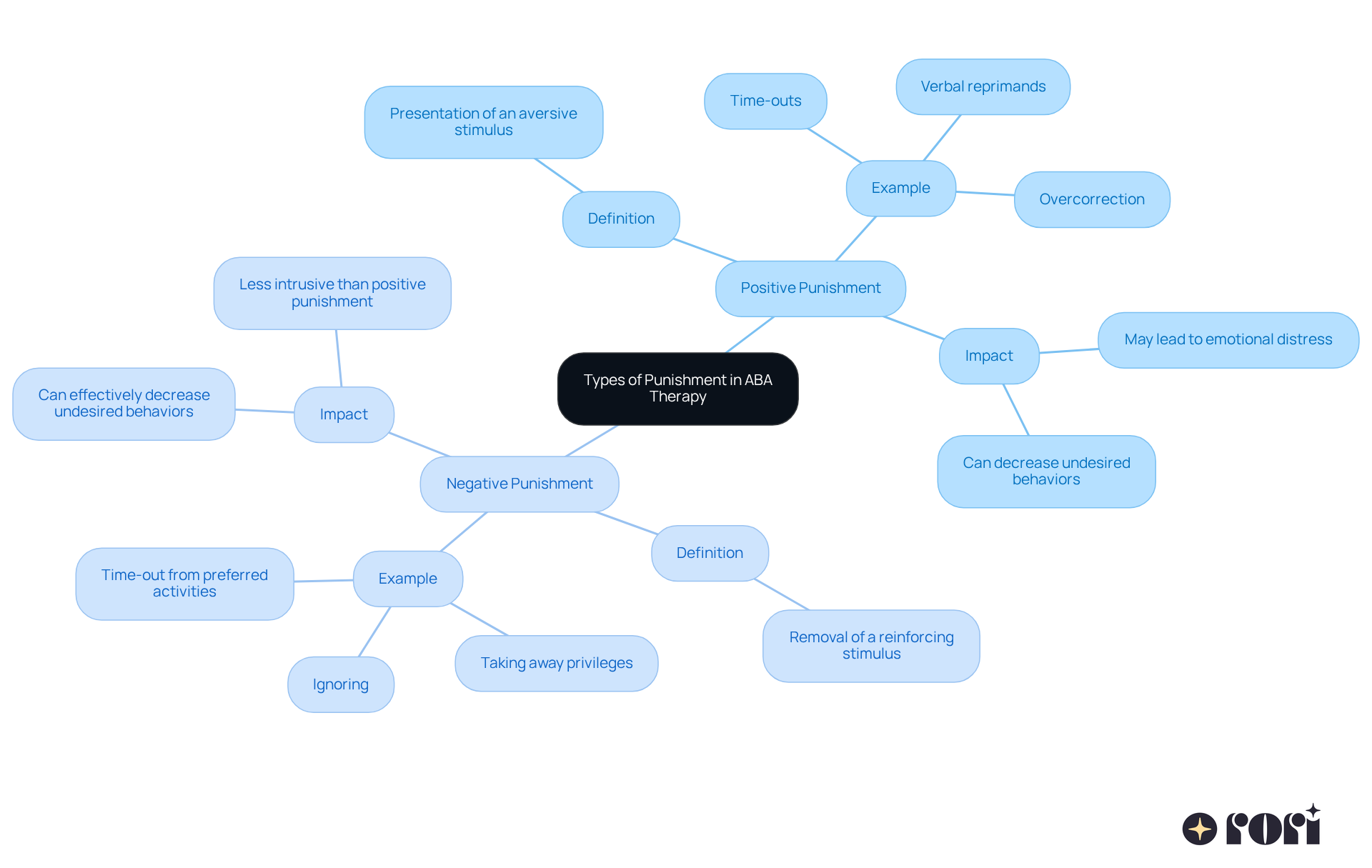
The discussion of in ABA therapy can be a tricky topic, especially when it comes to ethical concerns. While might help , it’s important to be aware of , such as increased anxiety or aggression in kids. Research suggests that if discipline is employed, particularly types of punishment aba, it should be a , only after exploring all other reinforcement options. recommend that parents in choosing types of punishment aba, ensuring these strategies are in the best interest of their child.
For instance, some case studies show that while , they don’t necessarily teach kids what to do instead. By , parents can . This helps create a balanced approach to that prioritizes emotional and psychological well-being. So, let’s explore this together and find the best path forward for your child!

Understanding the various types of punishment in ABA therapy is so important for parents looking for effective behavioral strategies for their children. This article has taken a closer look at the fundamental definitions of punishment, highlighting the differences between positive and negative approaches, while also emphasizing the importance of ethical considerations in using these strategies. By grasping these concepts, caregivers can make informed decisions that truly align with their child's needs and create a supportive therapeutic environment.
Let’s break it down a bit!
In conclusion, the journey to effective ABA therapy is all about finding a balanced approach that combines punishment with positive reinforcement. This ensures a nurturing atmosphere for growth and learning. Parents are encouraged to stay engaged in the therapeutic process, advocating for their child's best interests while fostering understanding and trust. By embracing these principles, families can navigate the complexities of ABA therapy together and empower their children to achieve meaningful behavioral changes. We’re here to help you every step of the way!
What is the definition of punishment in ABA therapy?
In ABA therapy, punishment refers to a consequence that follows an action, aimed at reducing the likelihood of that action occurring again. It can be categorized as positive or negative.
What are the types of punishment in ABA therapy?
The types of punishment in ABA therapy include positive punishment, which introduces an unfavorable result after an action, and negative punishment, which involves taking away something enjoyable.
Can you provide examples of punishment in ABA therapy?
An example of positive punishment is a young person losing certain privileges for exhibiting aggressive behavior. An example of negative punishment is using a time-out to address disruptive actions.
Why is understanding punishment important for parents of children with autism?
Understanding punishment is crucial for parents as it helps them navigate the complexities of ABA therapy and ensures that consequences are applied thoughtfully, particularly after reinforcement strategies have been attempted.
What ethical considerations are emphasized in ABA therapy?
Ethical considerations in ABA therapy prioritize the child’s well-being, ensuring that not every behavior, such as stimming, warrants a reprimand, especially if it does not pose a risk.
How should practitioners approach the use of consequences in ABA therapy?
Practitioners are encouraged to reflect on their methods, ensuring that consent and trust are central to the therapeutic process, and to apply consequences only after reinforcement efforts have failed.
What role do caregivers play in the ABA therapy process?
Caregivers are empowered through education about ABA principles and strategies, allowing them to better support their child's behavioral goals and contribute to tailored programs that meet individual needs.
How can personalized support benefit ABA therapy?
Personalized support in ABA therapy ensures that interventions are tailored to individual needs, which is vital for tracking progress and achieving behavioral goals.