Have you ever wondered how a simple schedule can make a world of difference for kids with autism? Understanding the importance of consistent routines in ABA therapy is key to creating effective learning environments. These schedules help reduce anxiety and boost engagement, allowing children to truly thrive in their therapeutic journey.
But let’s be real - how do we keep these schedules going when life gets in the way? It can feel overwhelming to stick to a routine when life throws curveballs. Without consistency, children may struggle to feel secure and engaged in their learning. Finding ways to create and stick to these schedules can truly change the game for our kids.
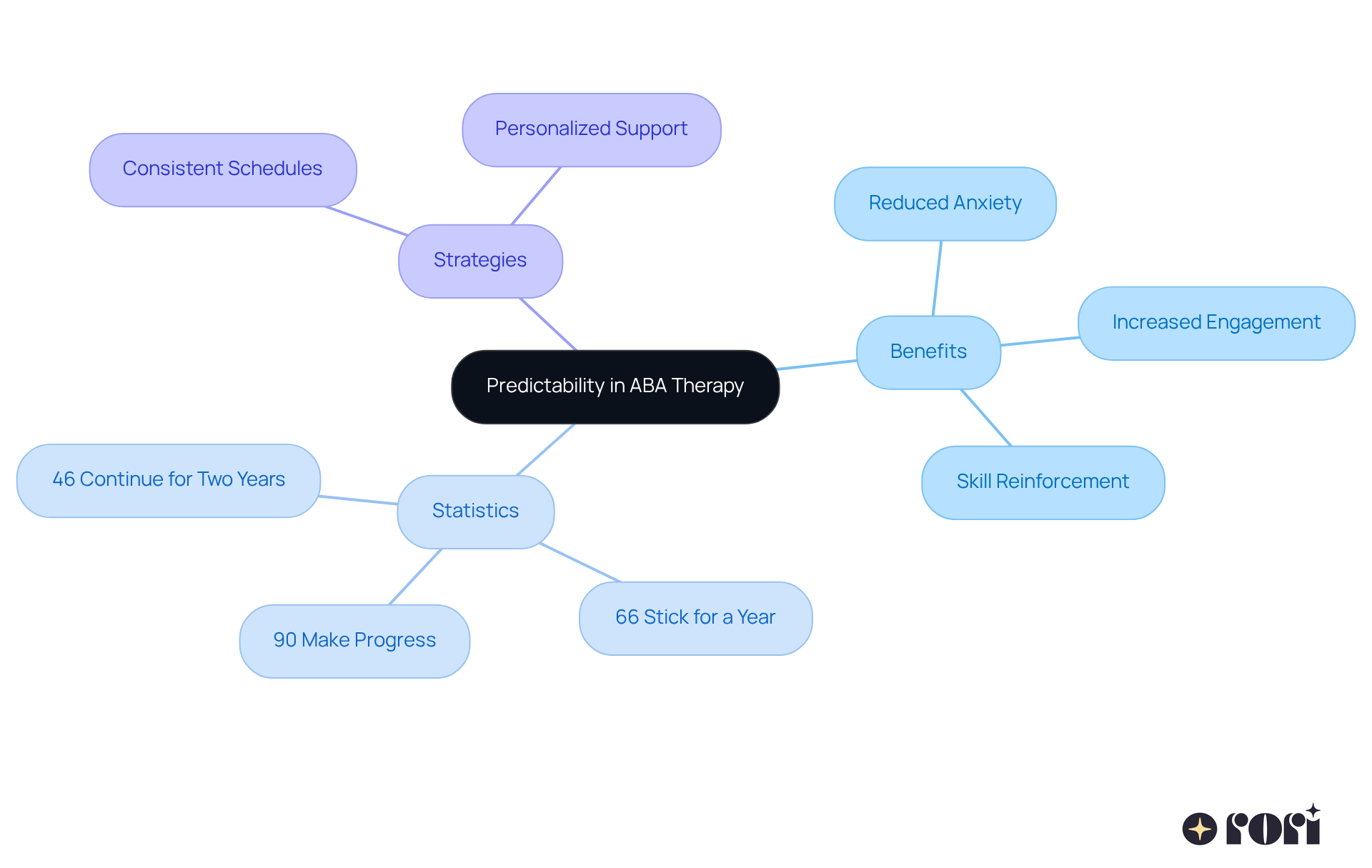
Have you ever noticed how much easier it is for kids to learn when they know what to expect? Predictability highlights why consistent schedules are essential in ABA therapy for autism. Having a regular schedule for kids illustrates why consistent schedules are essential in ABA therapy for autism, as it creates a safe space where they can feel less anxious and more engaged. For instance, understanding why consistent schedules are essential in ABA therapy for autism can help kids look forward to activities during counseling sessions, which in turn helps them focus better.
This predictability highlights why consistent schedules are essential in ABA therapy for autism, as it helps them learn new skills while also reinforcing what they already know. Kids who get around 35-40 hours of ABA therapy each week often do better in regular classrooms. In fact, studies show that 90% of kids make noticeable progress after intensive ABA treatment.
At Rori Care, we’re all about making sure each child gets the personalized support they need. Our behavior care engine keeps improving treatment plans based on progress reports, so kids can thrive in environments where routines are firmly established. This helps them navigate their surroundings with more confidence and less stress.
But here's the thing: while about 66% of kids start therapy and stick with it for a year, only 46% keep going for two years. That shows how tough it can be to stay engaged! Understanding these patterns can make a world of difference in your child's journey with therapy.
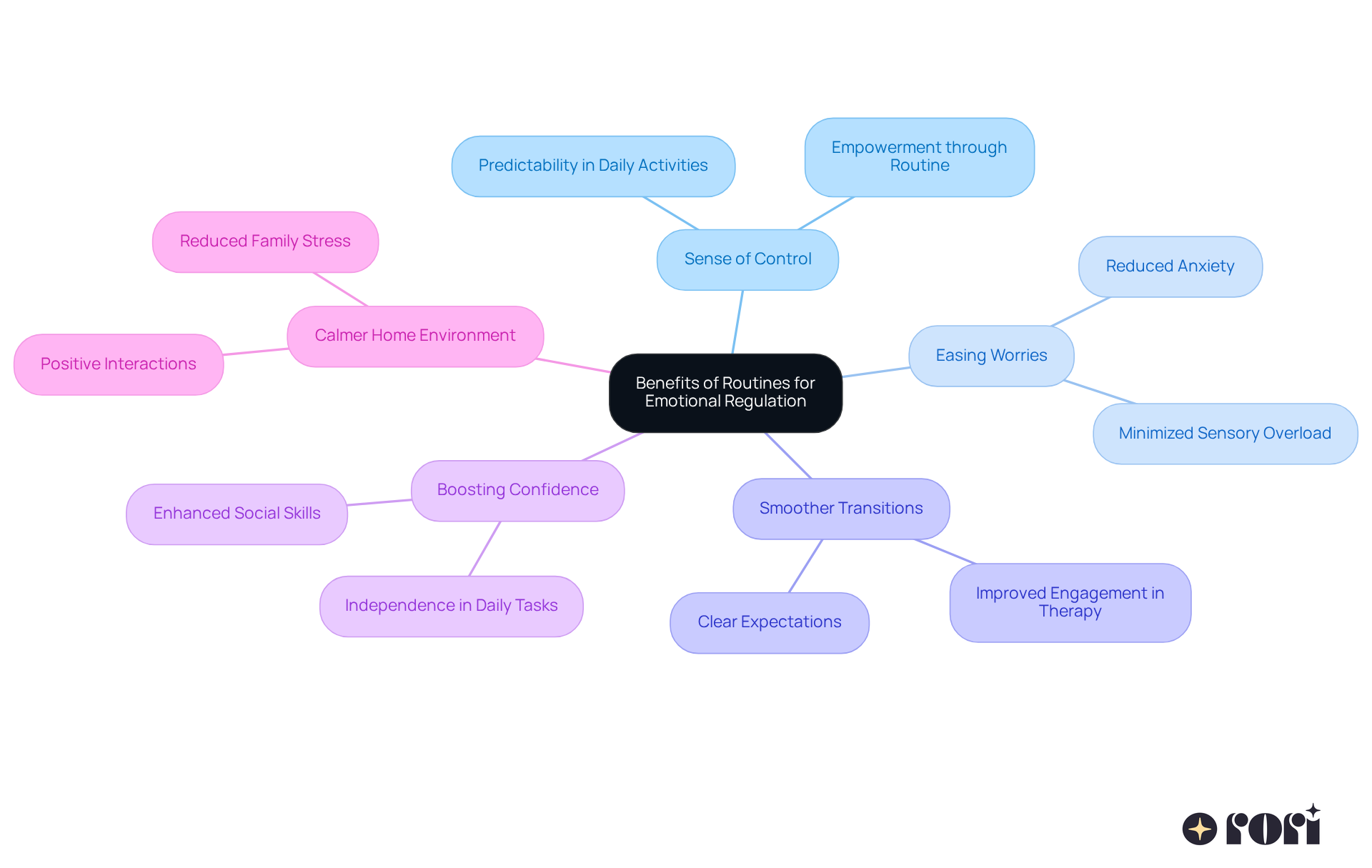
Have you ever noticed how a little routine can make a big difference for your child? Understanding why consistent schedules are essential in ABA therapy for autism can greatly enhance emotional regulation in youngsters. When we set up routines, it gives our kids a sense of control and helps ease their worries. For instance, when kids know that certain activities happen at specific times, they can mentally prepare, making transitions smoother. This stability is so important because it helps kids engage better in their therapy and lowers the chances of meltdowns.
Understanding why consistent schedules are essential in ABA therapy for autism can help kids manage their feelings better and handle stress more effectively. Plus, routines help kids learn to do things on their own, boosting their confidence and ability to manage their feelings. When caregivers get involved and understand ABA principles, they can provide consistent support at home, leading to better outcomes for their kids.
By embracing routines, you’re not just helping your child; you’re also creating a calmer home environment for everyone. Let’s explore this together!
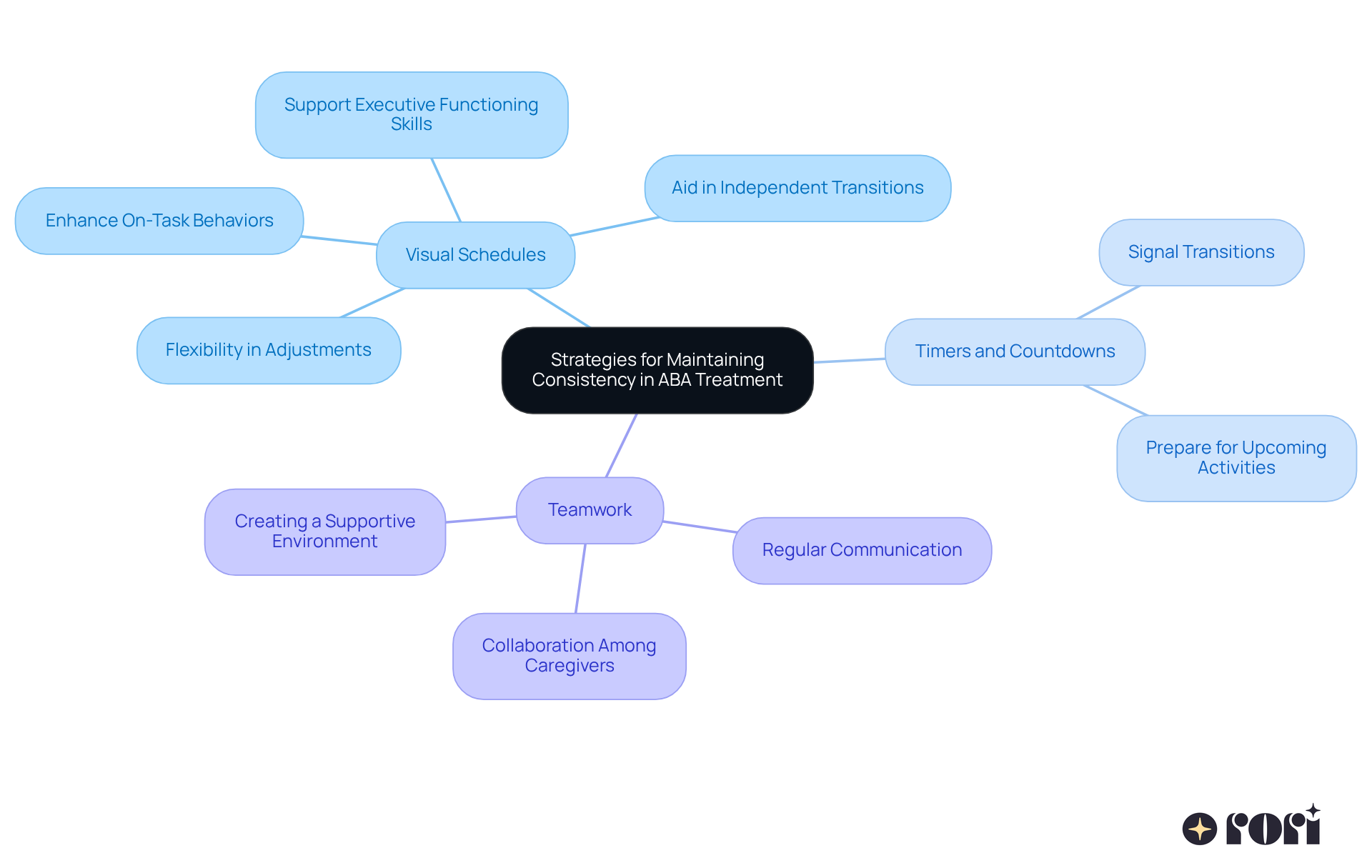
Navigating daily routines with young learners can sometimes feel overwhelming, can’t it? To ensure consistency in ABA treatment, several effective strategies can be employed.
When we work together, we can create a more supportive environment that truly benefits our children.
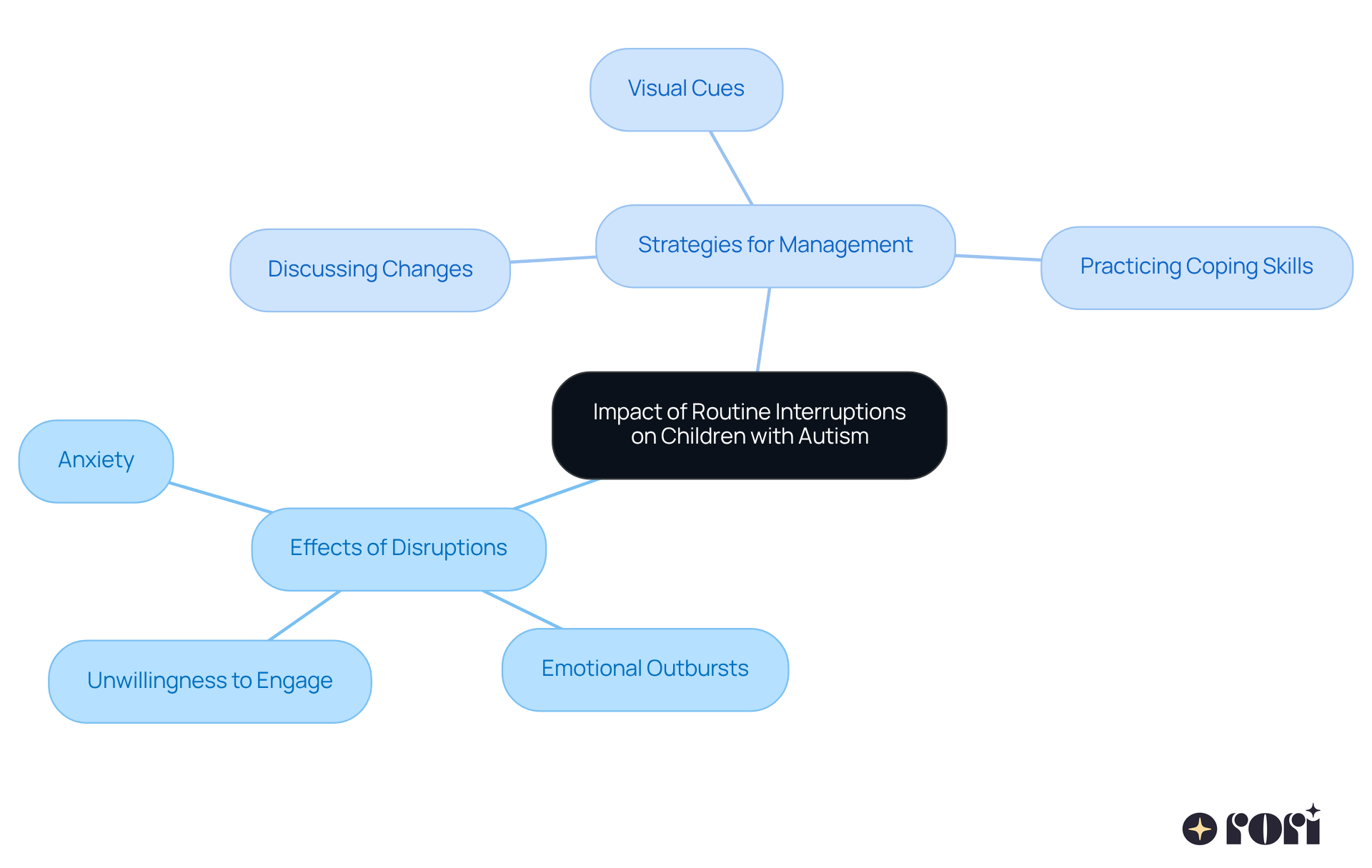
Imagine the stress when a familiar routine suddenly changes for a child with autism. When a routine gets disrupted, it can really throw a child off balance, causing anxiety and even emotional outbursts. For instance, if a therapy session is canceled or rescheduled without enough notice, it can leave the child feeling unsettled and less willing to engage in future sessions.
So, how can we help our kids handle these changes? Preparing them in advance is key! Strategies like using visual cues, talking about upcoming changes, and practicing coping skills can make transitions smoother. Research shows that kids with autism often feel confused and anxious when their routines change, which illustrates why consistent schedules are essential in ABA therapy for autism. By understanding the potential impacts of routine interruptions, you can help your child feel more secure and supported during transitions.
Have you ever noticed how a little predictability can make a big difference for your child? Understanding how consistent schedules in ABA therapy can create a supportive environment is key to helping children thrive. When routines are in place, kids feel safer and more engaged, allowing them to focus on learning new skills and reinforcing the ones they already have.
Throughout this journey, we’ve seen how consistent schedules can help with emotional regulation, reduce anxiety, and improve behavior. Simple strategies like visual schedules, timers, and open communication between caregivers and therapists are essential for keeping things on track. And let’s not forget how important it is to prepare for any changes in routine - this helps children feel secure and ready to tackle their therapy.
By sticking to these routines, children can feel more secure and ready to learn, making life easier for everyone at home! Prioritizing consistency not only supports kids on the autism spectrum but also creates a calmer, more predictable environment for families. So, let’s take action together! Implementing these strategies can truly make a difference in the lives of children with autism, paving the way for their success and happiness.
Why is predictability important in ABA therapy for autism?
Predictability is important in ABA therapy for autism because it helps children feel less anxious and more engaged. A consistent schedule allows them to know what to expect, which enhances their ability to learn and focus during therapy sessions.
How does a regular schedule benefit children in ABA therapy?
A regular schedule benefits children in ABA therapy by creating a safe space that fosters learning. It helps them look forward to activities, reinforces existing skills, and aids in learning new ones.
How many hours of ABA therapy per week are recommended for better outcomes?
It is recommended that children receive around 35-40 hours of ABA therapy each week, as studies show that this level of intensity can lead to better progress in regular classrooms.
What percentage of children show noticeable progress after intensive ABA treatment?
Studies indicate that 90% of children make noticeable progress after undergoing intensive ABA treatment.
How does Rori Care personalize support for children in therapy?
Rori Care personalizes support by using a behavior care engine that continuously improves treatment plans based on progress reports, ensuring that each child receives tailored support to thrive in established routines.
What percentage of children start therapy and continue for two years?
Approximately 66% of children start therapy and stick with it for a year, but only 46% continue for two years, indicating challenges in maintaining engagement in therapy.
What can understanding engagement patterns in therapy help with?
Understanding engagement patterns in therapy can significantly impact a child's journey, as it highlights the importance of consistency and support in maintaining progress.