Introduction
Understanding the ins and outs of executive functioning is so important for supporting children with Autism Spectrum Disorder (ASD). These mental processes play a key role in planning, focusing, and managing daily tasks. Parents often find themselves facing challenges as they help their children navigate the complexities of everyday life - whether it’s tackling schoolwork or engaging in social interactions.
This article dives into effective strategies and interventions that can boost executive functioning skills in children with ASD. We’ll address the unique hurdles they encounter along the way. So, how can caregivers use these insights to empower their children and foster independence in a world that can sometimes feel overwhelming? Let’s explore this together!
Define Executive Functioning in Children with ASD
Executive functioning is all about those mental processes that help us plan, focus, remember instructions, and juggle tasks. For many parents of children with Autism Spectrum Disorder (ASD), providing can be a bit tricky. It’s not uncommon to see your child struggle with daily activities, schoolwork, or even making friends.
Key parts of executive functioning include:
Understanding these elements is super important! It can really help in creating for children with ASD tailored to meet their .
Let’s ! By grasping these concepts, you can feel more equipped to support your child and navigate the challenges that come your way. Remember, you’re not alone in this journey!

Explore Key Components of Executive Functioning
Let’s discuss some key components of that can significantly impact our kids.
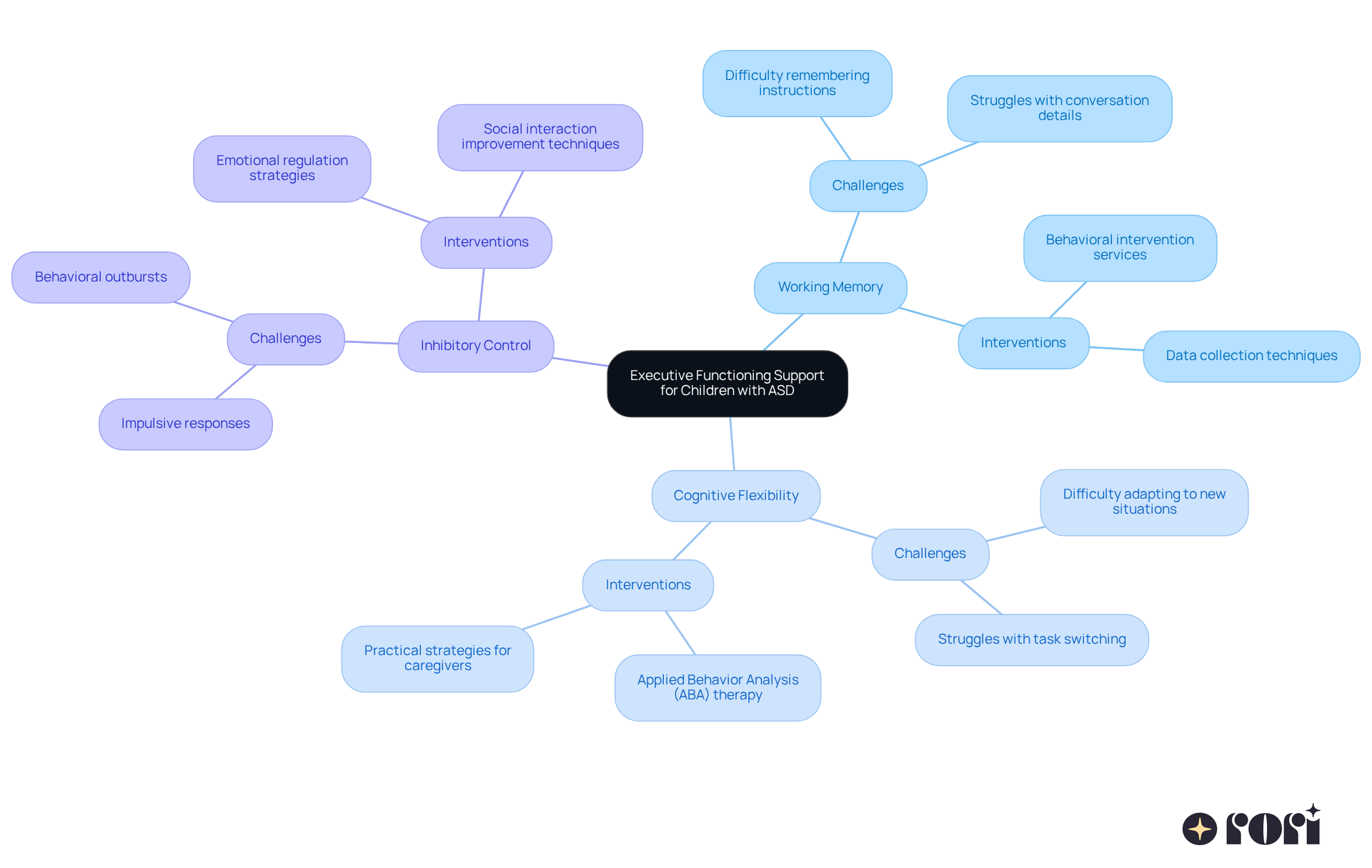
- : This is all about holding onto and juggling information for a short time. Many children with ASD find this tricky, which can make it hard for them to remember instructions or details from conversations. Imagine how frustrating that can be! It can really affect their learning and social interactions, as they might miss out on important bits of information needed for effective communication. That’s where Rori Care's come in, offering and tailored assistance for individuals facing these challenges.
- : Now, let’s chat about . This is the ability to adapt to new situations and switch between tasks. For many kids with ASD, shifting gears or adjusting to changes in routine can be a real hurdle. Rori Care's is designed to meet each child’s unique needs, giving caregivers practical strategies that align with ABA principles to boost cognitive flexibility.
- : Finally, we have , which is all about managing those impulsive responses and emotions. Kids with ASD might struggle here, leading to behavioral outbursts or challenges in social settings. But don’t worry! There are effective interventions that can help improve and social interactions. Understanding these components allows caregivers to design interventions that provide , specifically addressing the unique challenges they face. Plus, using helps track progress.
And let’s not forget the importance of . It’s crucial for enhancing learning, verbal, and social skills in individuals with autism. So, if you’re navigating this journey, remember: you’re not alone, and we’re here to help you every step of the way!
Implement Evidence-Based Strategies for Support
Providing can feel like a big task, but there are some wonderful strategies that can really help! Here’s how Rori Care embraces the power of to empower our little ones:
- Visual Supports: Think about using . These tools can help kids understand and stick to their daily routines. Visual aids not only boost memory but also set clear expectations, making it easier for young learners to navigate their day with a bit more independence.
- Structured Routines: Establishing can work wonders! Kids thrive when they know what to expect, which is a key principle of ABA therapy that includes , tailored to each child's unique needs. It can really help .
- Activity Breakdown: is another great approach. This way, children can focus on one part at a time, which helps minimize stress and increases the chances of completing their tasks. Plus, it’s a fantastic way to build those !
- : Who doesn’t love a little reward? Implementing a reward system for completing tasks or showing improved executive functioning support for children with ASD can significantly boost motivation. It highlights the through its ABA treatment, reinforcing those positive behaviors.
Let’s explore this together! We’re here to !

Utilize Technology to Enhance Executive Functioning Support
Technology plays a vital role in providing for children with ASD, and when combined with , the benefits can really soar! Let’s take a look at some effective tools that can make a big difference:
- : Tools like Todoist and Google Keep help young individuals manage their responsibilities and deadlines. This not only boosts their organization and time management skills but also eases caregiver stress. Research shows that kids using these apps often improve their ability to prioritize and complete tasks, which can lead to happier family dynamics.
- : Apps such as Choiceworks provide visual schedules that clarify daily routines and transitions. These tools can significantly reduce anxiety and improve adherence, as kids can see what’s coming next. Caregivers using these tools can align their support with therapeutic strategies, leading to .
- : Online platforms that gamify education engage young learners while teaching . Case studies reveal that kids in these interactive environments show increased motivation and skill retention. Empowered caregivers can use these platforms to effectively support their child’s learning journey.
- : Setting alarms and reminders on devices helps kids remember important tasks and appointments. This practice fosters independence and responsibility, as they learn to manage their own schedules. Caregivers who understand the value of these reminders can provide better support at home, complementing professional interventions.
By incorporating these tech tools alongside , we can provide for children with ASD, nurturing their skills and . Recognizing the unique strengths of autistic individuals allows parents to leverage these tools effectively, enhancing their child’s learning experience. Let’s explore this together!

Conclusion
Understanding and supporting executive functioning in children with Autism Spectrum Disorder (ASD) is so important for their growth and happiness. By recognizing the key components of executive functioning - like working memory, cognitive flexibility, and inhibitory control - caregivers can create tailored strategies that help children tackle daily challenges more effectively.
Throughout this article, we’ve highlighted various evidence-based strategies. Think about using:
- Visual supports
- Structured routines
- Breaking activities down into manageable steps
- Offering positive reinforcement
Plus, integrating technology - like organizational apps and visual scheduling tools - can really boost the support for children with ASD. These approaches not only encourage independence but also help ease anxiety and improve overall learning outcomes.
Ultimately, supporting children with ASD is a journey that requires patience, understanding, and the right tools. By putting these strategies into action and leveraging technology, caregivers can truly make a meaningful difference in their child's life. Embracing these practices not only aids in skill development but also promotes a more fulfilling and confident experience for children with ASD.
Let’s explore this together! Remember, you’re not alone in this journey. We’re here to help you every step of the way!
Frequently Asked Questions
What is executive functioning in children with ASD?
Executive functioning refers to the mental processes that help individuals plan, focus, remember instructions, and manage multiple tasks.
Why is executive functioning support important for children with ASD?
Executive functioning support is important for children with Autism Spectrum Disorder (ASD) because it can help them overcome challenges in daily activities, schoolwork, and social interactions.
What are the key components of executive functioning?
The key components of executive functioning include working memory, cognitive flexibility, and inhibitory control.
How can understanding executive functioning help parents of children with ASD?
Understanding executive functioning can help parents create tailored strategies to support their children’s unique needs, making it easier to navigate challenges they may face.
What challenges might children with ASD face related to executive functioning?
Children with ASD may struggle with daily activities, completing schoolwork, and forming friendships due to difficulties in executive functioning.
List of Sources
- Explore Key Components of Executive Functioning
- 10 inspiring quotes from people with autism | Autism Speaks (https://autismspeaks.org/life-spectrum/autism-quotes)
- Frontiers | Working memory in pre-school children with autism spectrum disorder: An eye-tracking study (https://frontiersin.org/journals/psychology/articles/10.3389/fpsyg.2022.922291/full)
- Autism Spectrum Disorder And Cognitive Flexibility A Cognitive Neuropsychological Study (https://riped-online.com/articles/autism-spectrum-disorder-and-cognitive-flexibility-a-cognitive-neuropsychological-study-105478.html)
- The relationship between cognitive flexibility and restricted, repetitive behaviors in children with autism: Parents’ reports vs. cognitive task performance (https://researchsquare.com/article/rs-7814208/latest)
- Celebrating Neurodiversity: Inspiring Words on Autism | Step Ahead ABA (https://stepaheadaba.com/blog/autism-quotes)
- Implement Evidence-Based Strategies for Support
- The use of visual schedules to increase academic-related on-task behaviors of individuals with autism: a literature review (https://tandfonline.com/doi/full/10.1080/20473869.2024.2402124)
- Quotes About Autism - Arms Wide Open ABA Therapy (https://armswideopenaba.com/blog/quotes-about-autism)
- Why Is Routine Important for Autism (https://riseupforautism.com/blog/autism-and-routine)
- The Efficacy of Visual Activity Schedule Intervention in Reducing Problem Behaviors in Children With Attention-Deficit/Hyperactivity Disorder Between the Age of 5 and 12 Years: A Systematic Review - PMC (https://pmc.ncbi.nlm.nih.gov/articles/PMC8733412)
- Utilize Technology to Enhance Executive Functioning Support
- Quotes About Autism - Arms Wide Open ABA Therapy (https://armswideopenaba.com/blog/quotes-about-autism)
- advancedautism.com (https://advancedautism.com/post/autism-apps-for-children)