Navigating sleep challenges with children on the autism spectrum can feel overwhelming for many parents. Did you know that over 80% of kids with autism face significant sleep issues? This can really affect their behavior and learning.
In this article, we’ll share some essential tips to help improve your child’s sleep quality. From creating a calming bedtime routine to setting up a sleep-friendly environment, we’ve got you covered! But what if the usual methods just aren’t cutting it? How can you adapt your approach to find what truly works for your unique child?
Let’s explore this together! We’re here to help you every step of the way!
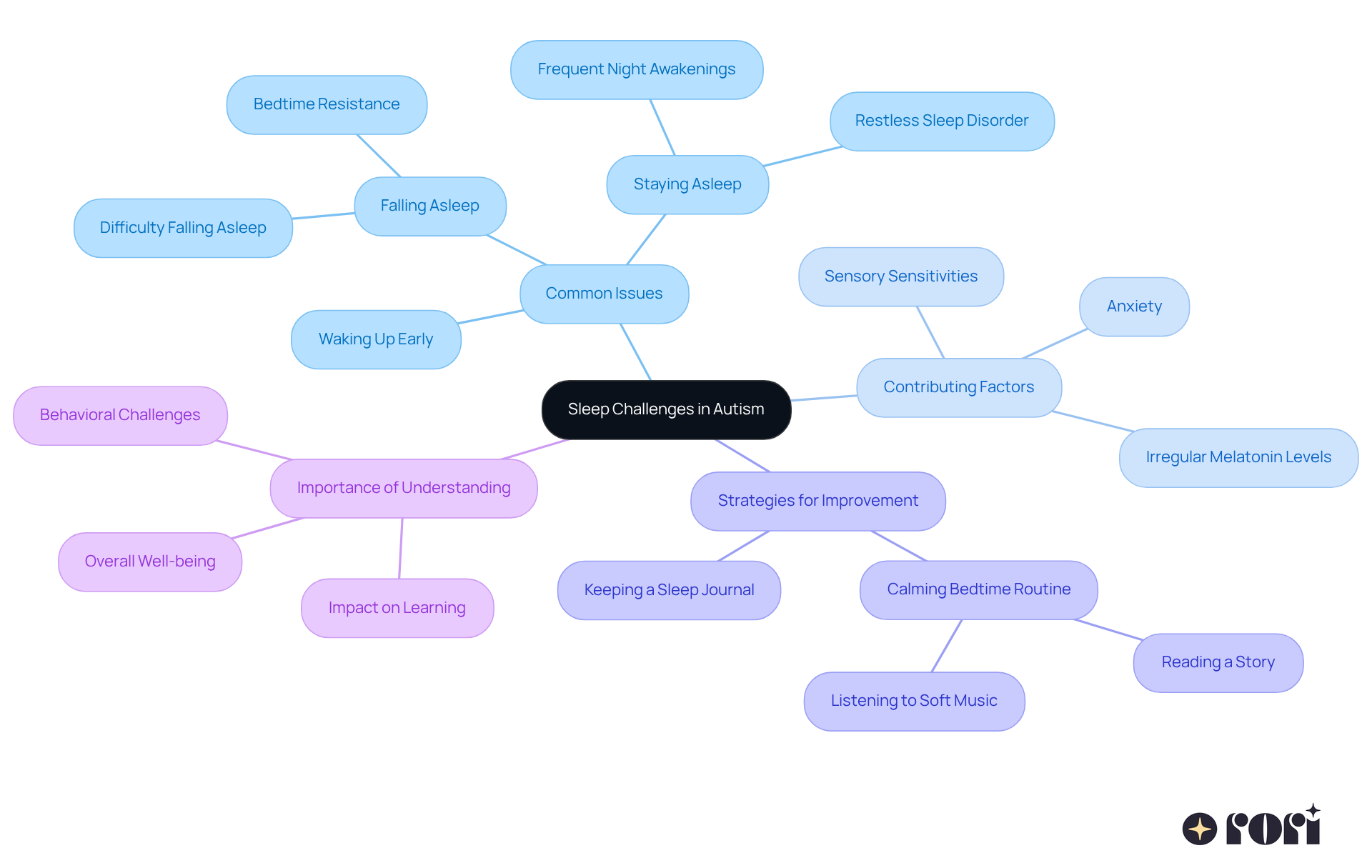
Sleep difficulties are pretty common for kids with autism. Many struggle with falling asleep, staying asleep, or waking up too early. These challenges often come from a mix of factors like sensory sensitivities, anxiety, and irregular melatonin levels. Did you know that over 80% of kids with autism spectrum disorder (ASD) face significant sleep issues? This can make behavioral challenges worse and disrupt their learning. For example, kids with ASD often take much longer to fall asleep than their neurotypical peers, with nearly half of children aged 1-3 years experiencing trouble in this area.
Sensory sensitivities can make sleep even trickier. Many autistic kids find it hard to relax due to environmental stimuli that disrupt their ability to drift off. That’s why establishing a calming bedtime routine is so important! Aim for something predictable that lasts about 20 to 30 minutes, filled with relaxing activities like:
Keeping a sleep journal can also be super helpful. It allows parents to track sleep patterns and identify specific triggers that might be affecting their child’s ability to relax. This information can be a game-changer when discussing sleep issues with healthcare providers or therapists, leading to a more personalized approach to treatment.
Understanding these challenges is key for parents who need dealing with sleep challenges in autism to improve their child’s sleep quality. By addressing the underlying factors and trying out effective strategies, families can create a healthier sleep environment that offers guidance for parents dealing with sleep challenges in autism and supports their child’s overall well-being. Let’s explore this together!
Creating a sleep-friendly environment for your little one can serve as guidance for parents dealing with sleep challenges in autism and make a world of difference! Here are some simple adjustments you might consider:
Let’s explore these ideas together as guidance for parents dealing with sleep challenges in autism, to see how they can help your child get the restful sleep they deserve!

Creating a regular nightly routine can serve as guidance for parents dealing with sleep challenges in autism, helping your little one transition to sleep more smoothly. Let’s explore some simple steps to establish an effective routine together:
By incorporating these steps, you’re not just helping your child sleep better; you’re also offering guidance for parents dealing with sleep challenges in autism by creating a comforting routine that they can look forward to each night. We’re here to help you every step of the way!

Offering guidance for parents dealing with sleep challenges in autism, such as helping your child unwind before bed, can significantly improve their sleep quality. Here are some friendly techniques to try:
By incorporating these techniques into your nightly routine, you can create a more peaceful atmosphere that offers guidance for parents dealing with sleep challenges in autism, thereby enhancing your child's sleep quality and emotional well-being. Let’s explore this together!

To make your sleep strategies truly effective, let’s dive into some helpful steps:
Let’s explore this together! We're here to help you every step of the way!

Understanding and addressing sleep challenges in children with autism is so important for their overall well-being. By recognizing the unique factors that contribute to these difficulties, parents can implement effective strategies that promote better sleep. From creating a calming sleep environment to establishing a consistent bedtime routine, these approaches not only enhance sleep quality but also support emotional stability and behavioral improvements.
Throughout this journey, we’ve shared key insights, like the importance of:
Keeping a sleep diary, utilizing calming activities, and seeking professional help when needed are all vital components that can lead to successful outcomes. These steps empower parents to take an active role in their child's sleep journey, ensuring that each child receives the tailored support they need.
Ultimately, improving sleep for children with autism is a collaborative effort that requires patience, understanding, and a willingness to adapt. By embracing these strategies and remaining committed to nurturing a healthy sleep environment, parents can significantly enhance their child's quality of life. The journey may be challenging, but the rewards of restful nights and happier days are well worth the effort. Let’s explore this together!
What sleep challenges do children with autism commonly face?
Children with autism often struggle with falling asleep, staying asleep, or waking up too early. These difficulties can stem from factors such as sensory sensitivities, anxiety, and irregular melatonin levels.
How prevalent are sleep issues among children with autism spectrum disorder (ASD)?
Over 80% of children with autism spectrum disorder face significant sleep issues, which can exacerbate behavioral challenges and disrupt their learning.
What are some factors that contribute to sleep difficulties in autistic children?
Factors contributing to sleep difficulties include sensory sensitivities that make it hard to relax, anxiety, and irregular melatonin levels.
What strategies can help improve sleep for children with autism?
Establishing a calming bedtime routine lasting 20 to 30 minutes with relaxing activities, such as reading a story or listening to soft music, can help improve sleep.
How can keeping a sleep journal benefit parents of children with autism?
A sleep journal allows parents to track sleep patterns and identify specific triggers affecting their child's ability to relax, which can be valuable when discussing sleep issues with healthcare providers or therapists.
What adjustments can be made to create a sleep-inducing environment for children with autism?
Adjustments include using blackout curtains for light control, employing a white noise machine or gentle music to mask disruptive sounds, ensuring bedding meets sensory preferences, and maintaining a comfortable room temperature of 68-72°F (20-22°C).
Why is it important to understand sleep challenges in autism?
Understanding these challenges is crucial for parents seeking guidance to improve their child's sleep quality and overall well-being by addressing underlying factors and implementing effective strategies.